
Legacy Hady/Udhiyah/Qurbani/Fidyah (Damm) Service

  • This service will provide for individuals and groups the time of sacrifice on the day of Eid. All types are accepted and welcome Hady/Udhiyah/Qurbani/Fidyah (Damm).
  • This service will give you the benefit of knowing the time your sacrifice is made.
  • Orders must be made by
    Deadline: 9 pm Makkah time on the 8th of Dhul Hijjah – approximately Sunday May 25, 9 pm Makkah time
    Anything ordered after this time will be sacrificed the following day.
    Camels will be sacrificed on the 12th and 13th of Dhul Hijjah.
  • Confirmation of the sacrifices will be sent via The Legacy Institute Telegram channel: https://t.me/thelegacyi
  • FOR HAJJ GROUPS: Hajj Group orders are taken as well, please contact admin@legacy.institute via email or WhatsApp by Clicking Here
  • Anyone who needs to pay Fidyah (Damm) the service is available at any time.
  • Meat will be distributed to the needy and refugees in Makkah as well as frozen and shipped to needy countries throughout the Muslim world via Official organization with the Ministry of Environment, Water and Agriculture, and Ministry of Human Resource and Social Development under approval of the Ministry of Hajj
  • Cost for Hady/Qurbani/Udhiyah/Fidyah (Damm)
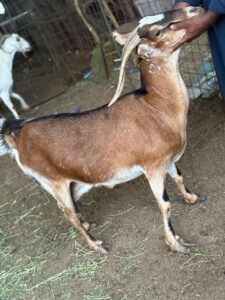
  • Goat -$195 USD
    Sheep – $250 USD
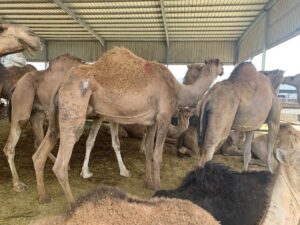
    Camel – $1360 USD
    Camels will be sacrificed on the 12th and 13th of Dhul Hijjah.

  • TIMING CHOICES
    1.  For those staying in Majar Al Kabsh – the suggested time is: 9 am Makkah time as they do their stoning after Fajr
    2.  For those staying in Muaisim – the suggested time is: After Maghrib Makkah time as many groups usually do their stoning after Asr
    3.  2 pm Makkah time is also given as a choice
    4.  You can choose anytime you like from the above regardless of your camp.
    – Those paying Fidyah (Damm) do not need to choose a time because it is not time specific, choose Fidyah (Damm) and it will be done on your behalf and confirmation will be sent to you.
    – No changing timings, unless there is an emergency and it needs to be delayed. Please make an informed decision.

Any questions can be messaged via WhatsApp By Clicking Here if you want quick answers, otherwise feel free to reach out via email – admin@legacy.institute

This service is non-refundable

Frequently Asked Questions (FAQ)

What is Hady (Qurbani, Udhiyah)?

Every pilgrim that is doing the types of Hajj Qiran and Tamatu’ has to have one sacrificial animal at least per person. If they cannot they must fast to make up for it, three days during Hajj and seven when they return. The sacrifice is called Hady. In South Asia it’s referred to as Qurbani, and some Arabs refer to it as Udhiyah even though Udhiyah refers to the sacrifice of the non-pilgrim on Eid Al Adha. They both have similar conditions except the sacrifice specific to the pilgrim and that must be done in Makkah during the days of Eid, is called Hady.

Hady is the sacrifice that is done by the pilgrim or on their behalf on the day of Eid or can extend to all the days of Eid and it must be done in Makkah.

The Prophet Muhammad peace be on him, did certain acts on the Day of Eid in his Farewell Pilgrimage.

1. Throwing the pebbles at a pillar in Mina, known as Ramy Al Jamarat
2. then Sacrifice of the animal, known as Hady
3. then Shaving/cutting one’s hair, known as Halq
4. then Circling around the Kabah and going between the two mountains of Safa and Marwah, known as Tawaf an Sa’ii.

All scholars agree that it is recommended to do these in order, and the Hanafi school views it as an obligation to maintain the order.

We are facilitating this service to follow the guidance of the Prophet Muhammad peace be on him in the most recommended manner by all scholars of Islam.

فَمَنْ تَمَتَّعَ بِالْعُمْرَةِ إِلَى الْحَجِّ فَمَا اسْتَيْسَرَ مِنَ الْهَدْيِ ❁

And whosoever performs the Umrah in the months of Hajj, before (performing) the Hajj, (i.e. Hajj al-Tamattu and Hajj al-Qiran), must sacrifice a Hady such as is easy (i.e. that you can afford)…
[Surah al-Baqarah, 2:196]

Can only a pilgrim do Hady in Makkah or can a non pilgrim do it also?

It is also a sunnah for a non pilgrim to have a Hady sent to be sacrificed in Makkah as this act is meant for thankfulness and veneration of the time, the sanctity of the place, and in worship and submission to the Almighty in the most sacred and best of days – the first ten Days of Dhul Hijjah, the ten best days of the year in the Islamic calendar.

Aisha رضي الله عنها narrates the Messenger of Allah ﷺ said:

A human does no action from the actions on the day of Nahr more beloved to Allah than (sacrifice of an animal which results in their) blood flowing. On the Day of Judgement, it will appear with its horns, and hair, and hooves, and the blood will be accepted by Allah from where it is received before it even falls upon earth.

[Narrated in Sunan al-Tirmidhi]

How many should a pilgrim do? Is there a minimum? Can I do more than one?

Every pilgrim that is doing the types of Hajj Qiran and Tamatu’ has to have one sacrificial animal at least per person. If they cannot they must fast to make up for it, three days during Hajj and seven when they return.

The pilgrim can sacrifice:
Goat
Sheep
Cow
Camel

The pilgrim can also have 1/7 of a share in a cow or camel and it would suffice the obligation. Meaning, seven people can share a cow or camel.

It is also a sunnah to do more than one. The Prophet Muhammad peace be on him had 100 camels sacrificed for himself, and an unspecified number of cattle for his wives. He sacrificed 63 with his own hand and the rest were done by Ali  رضي الله عنه

Jafar said:

…he then went to the place of sacrifice and sacrificed 63 (camels) with his own hand. Then he gave the remaining number to Ali  رضي الله عنه who sacrificed them and he shared his sacrifice with him. He then commanded that a portion of meat from each sacrificial animal should be put in a pot. When it was cooked, both of them (the Prophet ﷺ and Ali) took some meat out of it and drank its soup.

[Narrated in Sahih Muslim]

What is Fidyah (Damm)?

Fidyah (Damm) is referred to as the penalty of the sacrifice of an animal that a pilgrim pays when they commit a forbidden act while they are in the state of Ihram, or they missed out something that requires them to pay a sacrifice.